

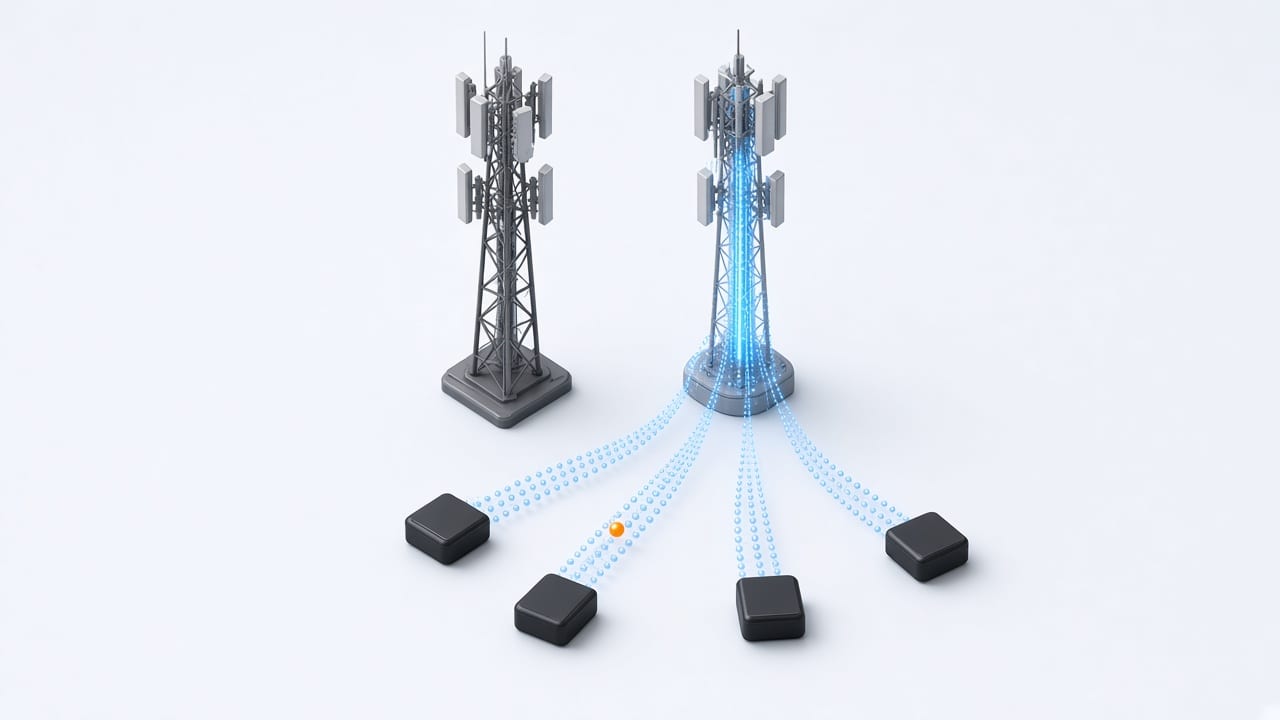
What happens to 2G and 3G trackers when carriers switch those networks off, which technologies replace them, and how to plan the change without losing customers.
// What is happening
Mobile carriers are freeing up 2G and 3G spectrum to use it for 4G and 5G. When a network is switched off, trackers that only work on it stop reporting, even if the device is powered and properly installed. Dates vary by country and carrier, so check them directly with your SIM provider.
// Replacement technologies
For GPS tracking there are three main options:
- ▸ 4G LTE (Cat-1 or Cat-4): the most common choice for vehicles, with good coverage and enough speed for commands and video.
- ▸ LTE Cat-M1 (LTE-M): designed for IoT, uses less battery and works better indoors.
- ▸ NB-IoT: very low power for assets that report a few times a day; not suitable for video or continuous tracking.
// How to plan the change
List your devices by network technology, prioritize customers in areas that lose coverage first, and pitch the replacement as an upgrade: a new 4G device usually brings more features than the old one. Also make sure your M2M SIM has LTE-M or NB-IoT coverage if you choose those technologies.
// Common mistakes
Buying 4G devices whose fallback is 2G only, not testing coverage on the customer's real routes, and leaving the change to the last month. Ask the manufacturer for the device's band list and compare it with your carrier's.
// In TrackeraX
The supported device catalog includes 4G LTE, Cat-M1 and NB-IoT models from the main manufacturers. When a device is replaced, the customer keeps their history and settings on the platform; you just create the new device with its IMEI.